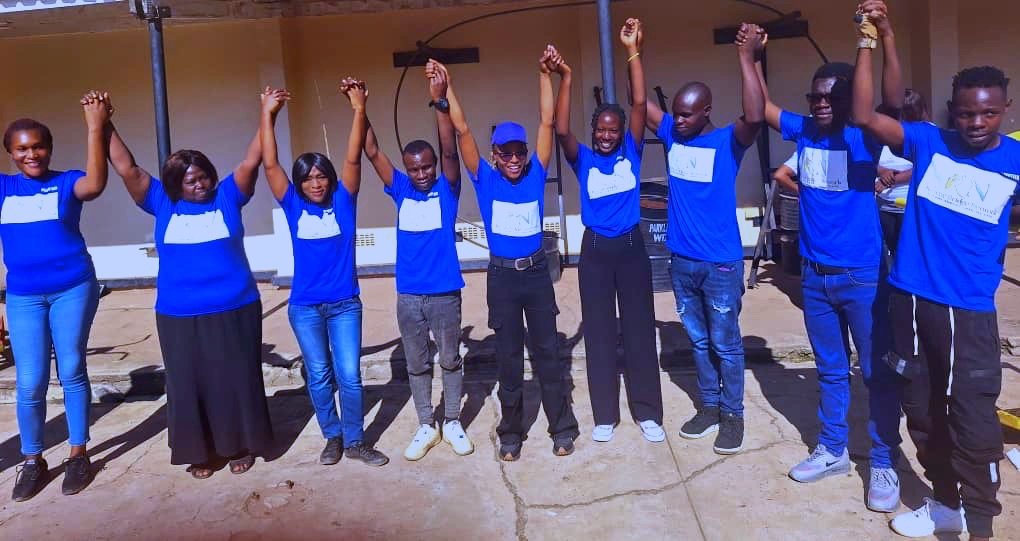
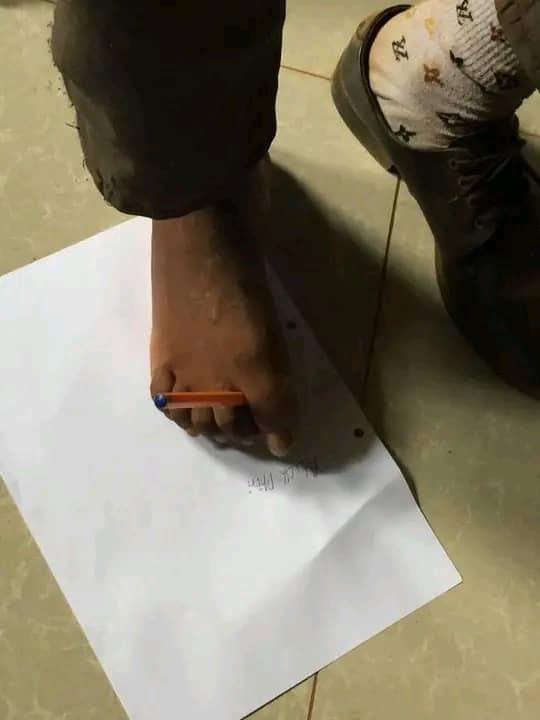
The Unbreakable Spirit of Alick: A Story of Resilience and Hope In a small village in Chipata, Zambia, there lived a young boy named Alick. His life had been marked by unimaginable challenges, yet his spirit remained unbreakable. Alick had lost both parents at a tender age, leaving him to fend for himself. Despite the odds against him, he refused to give up. One day, fate dealt Alick another cruel blow. He underwent an amputation, leaving him physically challenged. Many would have lost hope, but not Alick. He found a way to adapt, to overcome, and to thrive. With determination in his eyes, he learned to write with his feet. Alick’s love for learning knew no bounds. Despite his physical limitations, he was determined to attend school, to learn, and to grow. His spirit was contagious, inspiring those around him to believe in the impossible. As news of Alick’s story spread, the Rescue Bridge Network (RBN) community was moved to action. We realized that this young boy’s determination and resilience were qualities that we could learn from. We saw an opportunity to make a difference in his life, to support him in his journey, and to help him achieve his dreams. Alick’s story is a testament to the human spirit’s capacity for resilience and hope. Despite the challenges he faced, he refused to give up. Instead, he found ways to adapt, to overcome, and to thrive. His determination to learn, to grow, and to succeed is an inspiration to us all. As we reflect on Alick’s story, we’re reminded that we all have the power to make a difference in someone’s life. We can choose to support, to uplift, and to inspire others. We can be the change-makers, the hope-bringers, and the difference-makers. So, let’s come together to support Alick. Let’s provide him with the resources he needs to continue his education, to access medical care, and to live a life filled with hope and promise. Let’s show him that he’s not alone, that we believe in him, and that we’re committed to helping him achieve his dreams. Alick’s story is a reminder that we all have the power to inspire, to uplift, and to make a difference in someone’s life. Let’s seize this opportunity to touch a life, to change a story, and to inspire a community. Will you join us in supporting Alick’s journey? You can make a difference in Alick’s life by: Together, we can help Alick overcome his challenges and achieve his dreams. Let’s show him that he’s not alone, and that we believe in him. Share Alick’s story and inspire others to make a difference! Donate https://rescuebridgenetwork.org/donations/donation/ “RBN Family Support Appeal for Alick